
What Is Social Media Marketing and How Does It Work?
Social media marketing has become an important part of digital marketing. Today, businesses of all sizes use platforms such as Instagram, Facebook, LinkedIn, YouTube, and X to connect with customers, promote their products and services, and build their brands.
But what exactly is social media marketing? How does it work? And how can businesses use it to achieve their marketing goals?
In this complete guide, we will explain what social media marketing is, how social media marketing works, its benefits, different types, strategies, platforms, and common mistakes in a simple and easy-to-understand way.
Social media marketing (SMM) is the process of using social media platforms to promote a business, product, service, or personal brand.
It involves creating and sharing content that is useful, interesting, or valuable to a target audience.
Social media marketing can include:
- Creating social media posts
- Sharing images and graphics
- Creating videos and Reels
- Publishing Stories
- Running social media advertisements
- Responding to comments
- Communicating with customers
- Building online communities
- Promoting products and services
- Analyzing marketing results
The main purpose of social media marketing is not simply to gain followers. A good social media strategy focuses on achieving specific business goals.
These goals can include:
- Increasing brand awareness
- Generating leads
- Increasing website traffic
- Improving customer engagement
- Promoting products
- Increasing sales
- Building customer relationships
- Creating a strong online presence
For example, a small business in Calicut, Kerala can use Instagram to showcase its products, Facebook to communicate with local customers, and LinkedIn to build professional connections.
Why Is Social Media Marketing Important?
The way people communicate, search for information, and discover brands has changed significantly.
Customers now spend a considerable amount of time on social media platforms. This gives businesses an opportunity to communicate directly with their potential customers.
Builds Brand Awareness
Social media can help people discover a business for the first time.
By consistently publishing useful and engaging content, a business can increase its visibility and create brand recognition.
For example, a new digital marketing agency can publish SEO tips, social media tips, case studies, and marketing insights to introduce its services to potential customers.
Helps Reach Target Customers
One of the biggest advantages of social media marketing is the ability to reach specific audiences.
Businesses can create content for audiences based on factors such as:
- Age
- Location
- Interests
- Profession
- Behavior
- Business needs
This makes social media useful for both local and global businesses.
Improves Customer Engagement
Social media provides a direct communication channel between businesses and customers.
Customers can:
- Comment on posts
- Send direct messages
- Ask questions
- Share feedback
- Participate in polls
- Leave reviews
Businesses can respond to customers and build stronger relationships.
Generates Leads
Social media marketing can also help businesses generate leads.
Businesses can use:
- Lead generation advertisements
- Landing pages
- Website links
- Contact forms
- Direct messages
- Offers and promotions
A good social media campaign can move users from social media platforms to a website or landing page where they can take action.
Increases Website Traffic
Businesses can use social media posts to drive visitors to their websites.
For example, a business can publish a short introduction to a blog post on LinkedIn and provide a link to the full article on its website.
This can help increase website visitors and introduce users to other products or services.
How Does Social Media Marketing Work?
Social media marketing works through a combination of strategy, content, engagement, advertising, and analysis.
A simple social media marketing process is:
Research → Strategy → Content → Publishing → Engagement → Advertising → Analysis → Optimization
Let’s understand each step.
Step 1: Set Marketing Goals
Before creating social media content, a business should decide what it wants to achieve.
Some common goals include:
- Brand awareness
- Website traffic
- Lead generation
- Sales
- Customer engagement
- Community building
For example, the goal of a new business may be brand awareness, while an established company may focus on lead generation and sales.
Clear goals make it easier to measure success.
Step 2: Identify the Target Audience
The next step is understanding the target audience.
A business should know:
Who are my customers?
What problems do they have?
What products or services do they need?
Which social media platforms do they use?
What type of content do they like?
Understanding the audience helps marketers create more relevant content.
Step 3: Select the Right Platforms
Every business does not need to use every social media platform.
The right platform depends on the audience and business objectives.
Instagram is popular for visual content, Reels, Stories, products, lifestyle content, and personal branding.
Facebook can be useful for businesses, local communities, groups, advertisements, and customer communication.
LinkedIn is especially useful for B2B marketing, professional networking, personal branding, recruitment, and industry content.
YouTube
YouTube is useful for educational videos, tutorials, product demonstrations, reviews, and long-form content.
X
X can be useful for discussions, industry updates, news, opinions, and real-time conversations.
The goal is not to be everywhere. The goal is to be where your target audience is active.
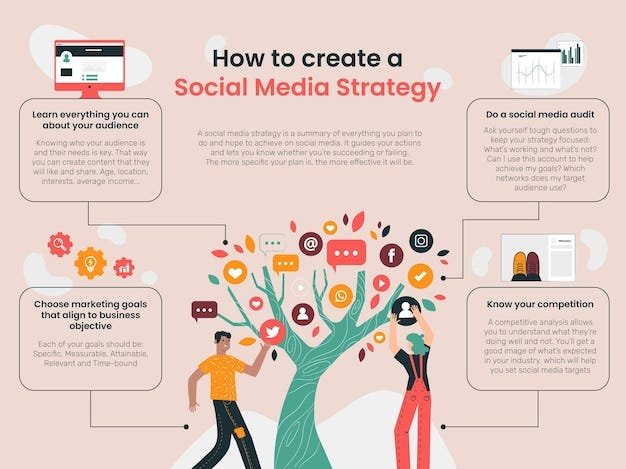
Creating a Social Media Marketing Strategy
A social media marketing strategy is a plan that explains how a business will use social media to achieve its marketing goals.
A good strategy should include:
- Marketing goals
- Target audience
- Social media platforms
- Content topics
- Posting schedule
- Advertising strategy
- Engagement plan
- Performance measurement
Content Strategy
Content is one of the most important parts of social media marketing.
Businesses can create different types of content.
Educational Content
Educational content helps audiences learn something useful.
Examples:
- Digital marketing tips
- SEO guides
- How-to posts
- Industry information
- Marketing statistics
Entertaining Content
Entertaining content can help increase engagement.
Examples include:
- Short videos
- Memes
- Trends
- Questions
- Interactive posts
Promotional Content
Promotional content focuses on products or services.
Examples:
- New product announcements
- Discounts
- Special offers
- Service promotions
- Product demonstrations
User-Generated Content
User-generated content is created by customers or users.
Examples include:
- Customer reviews
- Testimonials
- Product photos
- Customer videos
This type of content can help build trust.
Organic Social Media Marketing
Organic social media marketing refers to activities that do not involve directly paying for advertising.
Examples include:
- Regular posts
- Reels
- Stories
- Videos
- Comments
- Community discussions
- Customer interactions
Organic marketing can help businesses build a long-term relationship with their audience.
However, organic reach can vary depending on the platform, content quality, audience engagement, and algorithm changes.
For this reason, businesses should focus on creating content that provides real value.
Paid Social Media Marketing
Paid social media marketing involves paying social media platforms to display advertisements to selected audiences.
Popular advertising options include:
- Facebook Ads
- Instagram Ads
- LinkedIn Ads
- Video advertisements
- Lead generation campaigns
- Website traffic campaigns
- Conversion campaigns
Paid advertising allows businesses to reach audiences beyond their existing followers.
For example, a digital marketing agency in Kerala can create an advertisement targeting business owners in Calicut who may be interested in digital marketing services.
Social Media Marketing for Small Businesses
Social media marketing is particularly useful for small businesses because it provides an affordable way to build an online presence.
A small business can use social media to:
- Introduce its brand
- Showcase products
- Share customer reviews
- Promote offers
- Generate leads
- Communicate with customers
- Build local awareness
For example, a restaurant in Calicut can use Instagram to share food photos and Reels, Facebook to promote offers, and customer reviews to build trust.
A local service provider can also use social media to educate customers about its services and encourage them to contact the business.
Benefits of Social Media Marketing
Social media marketing provides several benefits for businesses.
1. Increased Brand Visibility
Regular social media activity can help more people discover a brand.
2. Better Customer Communication
Businesses can communicate directly with customers through comments and messages.
3. More Website Traffic
Social media content can direct users to websites, blogs, and landing pages.
4. Lead Generation
Businesses can use content and paid advertising to attract potential customers.
5. Improved Brand Trust
Customer reviews, testimonials, useful content, and regular communication can help establish credibility.
6. Cost-Effective Marketing
Organic social media marketing can be started with limited resources, while paid campaigns can be scaled according to budget.
7. Measurable Results
Social media platforms provide data about reach, engagement, clicks, and conversions.
Frequently Asked Questions

1. What is social media marketing?
Social media marketing is the process of using social media platforms to promote a business, product, service, or personal brand and connect with a target audience.
2. How does social media marketing work?
Social media marketing works by identifying a target audience, selecting suitable platforms, creating valuable content, publishing consistently, engaging with users, using paid advertising when needed, and measuring results.
3. Why is social media marketing important?
Social media marketing can help businesses increase brand awareness, engage customers, generate leads, drive website traffic, and support sales.
4. Which social media platform is best for marketing?
There is no single best platform for every business. The right platform depends on the target audience, industry, content type, and marketing objectives.
5. Is social media marketing useful for small businesses?
Yes. Small businesses can use social media marketing to build brand awareness, connect with local customers, promote products and services, and generate leads.
Conclusion
Social media marketing is an important part of modern digital marketing. It allows businesses and individuals to connect with their audiences, share valuable content, promote products and services, and build long-term relationships.
The basic process is simple:
Set Goals → Understand Your Audience → Choose Platforms → Create Content → Publish → Engage → Analyze → Optimize
Success in social media marketing does not happen overnight. It requires consistency, valuable content, audience understanding, testing, and continuous improvement.
Whether you are a small business, startup, freelancer, personal brand, or established company, having a clear social media marketing strategy can help you build a stronger online presence and achieve your business goals.
If you understand your audience, create useful content, choose the right platforms, and measure your results, social media can become a powerful channel for long-term digital marketing growth.
Social Media Marketing in Digital Marketing with Athul Madhu.